

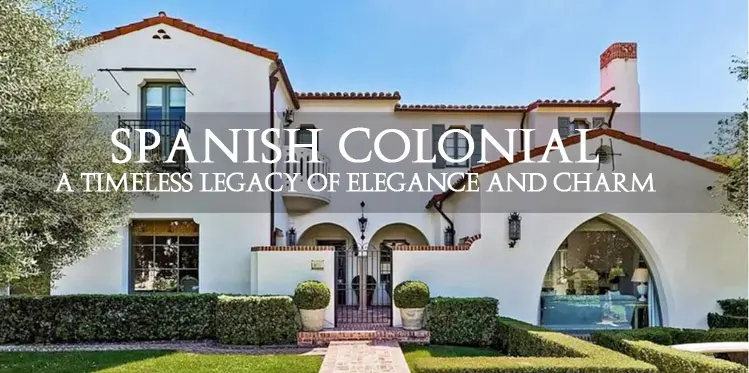
Spanish Colonial and Revival Architecture
Rooted in centuries of cultural exchange, Spanish Colonial and Revival architecture reflects warmth, artistry, and Mediterranean grace in the Americas.
California and Florida express this heritage vividly. History, light, and landscape converge, celebrating the spirit of Old Spain in a modern context.
Origins: The Birth of Spanish Colonial Design
Spanish Colonial architecture emerged in the late 15th and early 16th centuries as Spain expanded across the New World.
Settlers and missionaries blended Moorish, Gothic, and Renaissance influences. They adapted these styles to local climates and materials.
The result balanced function and beauty. Thick adobe or stucco walls defined the structures. Low-pitched terracotta roofs added character. Shaded arcades provided relief from the sun.
Stucco façades in earth tones—white, ivory, sand, and rose—captured light and shadow. Handmade clay tiles introduced texture and rhythm.
This architecture reflected more than decoration. It expressed simplicity, endurance, and harmony with nature.
Stucco façades in soft earth tones—white, ivory, sand, and rose—became canvases for light and shadow, while handmade clay roof tiles added texture and rhythm. This architecture was never merely decorative; it expressed a way of life centered around simplicity, endurance, and harmony with nature.
Hallmarks of Spanish Colonial Elegance
Spanish Colonial buildings balance austerity with ornament. Arched doorways and wooden beams lend strength to the design. Wrought-iron balconies add romance.
Carved stone and ceramic tiles provide bursts of artistry. These details often reflect Andalusian or Moorish motifs.
The courtyard, or el patio, lies at the heart of many homes. This tranquil sanctuary is designed for reflection.
Arcades or colonnades enclose these private spaces. They often feature fountains, citrus trees, and patterned floors.
This layout successfully blurs indoor and outdoor boundaries. Such architectural rhythm became the defining cadence of colonial life.
Light as an Element of Design
Lighting defines Spanish Colonial and Revival architecture.
It serves as an extension of craftsmanship and atmosphere. It is never just a functional necessity. In California and Florida, lighting enhances the architectural narrative.
These designs perfectly blend old-world charm with soft Mediterranean radiance.
Indoor Lighting: The Art of Warmth and Shadow
Spanish Colonial interiors feature a dance of light and shadow.
Hand-forged wrought-iron chandeliers hang from heavy timbered ceilings. These fixtures cast a warm, dappled light.
This glow accentuates the texture of stucco walls.
Wall sconces and metal lanterns add romantic charm. They beautifully mimic the soft flicker of candlelight.
Ceramic lamps and amber glass lanterns serve as accents. These pieces balance elegance with rustic authenticity.
The design creates a timeless ambiance. It remains rooted in tradition yet alive with warmth.
Outdoor Lighting: Ambience and Architectural Drama
Outdoor lighting in Spanish Colonial design is highly evocative. Wrought-iron lanterns light courtyards and terraces.
Wall-mounted fixtures or suspended lanterns decorate pergolas. These designs often feature clear or seeded glass panels. The light shimmers softly in the evening air.
Recessed lighting highlights the texture of exterior stucco walls. Uplights cast gentle shadows across arcades and archways.
In gardens, stone pedestals frame fountains and tiled walkways. The play of light and form continues long after sunset.
Florida estates use hanging lanterns and hurricane glass sconces. These fixtures balance elegance with durability in coastal breezes.
California missions feature iron torch lights and rustic lanterns. These create a dramatic dialogue between architecture and landscape.
The Revival: A Return to Mediterranean Grace
The Revival of the Spanish Colonial emerged in the late 19th and early 20th centuries, reigniting appreciation for this historic style. Following the 1915 Panama–California Exposition in San Diego, architects across the American Southwest and Florida embraced its romantic imagery and regional adaptability.
In California, the movement found expression in landmarks like the Santa Barbara County Courthouse—an iconic fusion of red tile roofs, painted ceilings, and lush gardens that captures the exuberance of Mediterranean design. In Florida, architects such as Addison Mizner reinterpreted Spanish Colonial motifs for coastal estates, blending European refinement with tropical exuberance. His work in Palm Beach and Boca Raton transformed the landscape into a living tribute to Iberian heritage.
A Global and Lasting Influence
The resonance of Spanish Colonial and Revival architecture extends far beyond the Americas. Its influence can be traced through the plazas of Mexico, the convents of Peru, the villas of the Philippines, and even the riads of Morocco. Each adaptation reflects a dialogue between cultures, climates, and centuries—a legacy of beauty that transcends geography.
Preservation and Legacy
Today, preservationists, architects, and artisans continue to safeguard the spirit of this architectural lineage. Institutions such as the Getty Conservation Institute in Los Angeles play a vital role in conserving historic structures, ensuring that the artistry and authenticity of Spanish Colonial design endure for generations to come. The same attention is given to lighting restoration—preserving the original wrought-iron lanterns and chandeliers, which remain integral to the architectural story.
Conclusion
The architecture of the Spanish Colonial and Revival remains a living bridge between past and present—a poetic conversation between Old World grace and New World imagination. From the mission corridors of California to the coastal estates of Florida, this style continues to enchant with its sunlit courtyards, hand-hewn details, and luminous play of light and shadow. It is more than an architectural movement—it is a celebration of cultural continuity, craftsmanship, and the enduring beauty of Mediterranean design reborn in the Americas.


