

Wrought Iron Lighting: Hand-Made vs. Machine-Made
When selecting the perfect lighting for your home, especially pieces like wrought iron chandeliers, iron chandeliers, wrought iron indoor wall sconces, or outdoor light fixtures, you face a fundamental choice between hand-made or machine-made. While both methods yield functional light sources, the process of their creation imprints a distinct character, quality, and value on the final product. Understanding this difference is key to making an investment that truly reflects your taste and desired aesthetic.
Hand-Made: The Mark of the Artisan and Long-Term Value
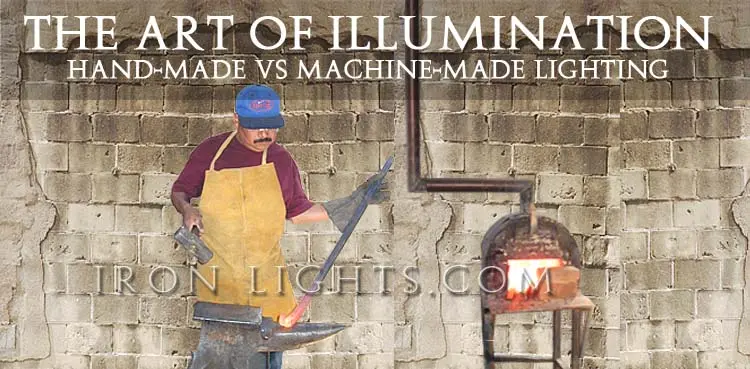
Hand-made iron fixtures trace their lineage back to the traditional blacksmith. The term “wrought iron” itself derives from “worked iron,” signifying the intensive, manual process involved. A skilled artisan heats raw iron and meticulously shapes it using a hammer and anvil. This method is characterized by:
- Unique Imperfections: No two hand-made pieces are ever exactly alike. The subtle variations in hammer marks, twists, and finishes are what give hand-wrought iron its authentic, rustic charm and one-of-a-kind character.
- Superior Durability and Finish: The repetitive hammering and heating process results in a dense, strong material. Furthermore, the hand-applied finish (whether painted, oiled, or waxed) is often more detailed and multi-layered, providing better resistance against the elements for outdoor light fixtures and ensuring a longer lifespan.
- Artistic Detail: Complex, flowing designs—such as the elaborate scrolls, and repousse accents found on a Gothic-style wrought iron chandelier or delicate flourishes on an indoor wall sconce—are often more fluid and organic when executed by hand, conveying a sense of time-honored craftsmanship.
The Investment Value
Hand-made iron fixtures are a long-term investment in quality and artistry. While the initial cost is significantly higher due to the intensive labor (often accounting for half or more of the price) and superior materials, the long-term cost of ownership is generally lower. These pieces are often built to last for generations, requiring little beyond basic maintenance, effectively making them heirlooms. Furthermore, unique, high-quality, period-appropriate, or custom-designed wrought iron chandeliers tend to retain their value and even appreciate over time, trading in the secondary and antique markets for substantial prices. They are considered functional art, adding intrinsic and perceived value to the home.
Machine-Made: Efficiency, Consistency, and Initial Savings
The machine-made approach utilizes automated processes, molds, and uniform welding techniques to produce iron fixtures at a faster rate and lower cost. While often still requiring some assembly or finishing by hand, the core forming of the iron is mechanized. This method offers distinct advantages:
- Consistency and Uniformity: Machine-made iron chandeliers and outdoor light fixtures are virtually identical, which is ideal for projects requiring multiple matching pieces.
- Cost-Effectiveness: The efficiency of mass production, often using overseas labor and automated stamping, results in significantly lower labor and unit costs. This makes these fixtures a more budget-friendly option.
- Precision and Symmetry: Modern machinery can achieve highly precise, sharp, and perfectly symmetrical shapes, catering to contemporary or minimalist designs.
The Investment Value
Machine-made fixtures offer excellent value for the short term, providing an accessible and reliable lighting solution. The upfront cost is low, which is appealing for budget-conscious homeowners or those planning to “flip” a property. However, the machine-made aesthetic lacks the uniqueness and character that drive collector value. They typically use thinner, less durable materials and finishes, leading to a shorter lifespan and potentially needing replacement in as little as 5-10 years. Therefore, while the initial price is low, the machine-made item is a consumable purchase with minimal to no resale value as a collector’s item; the value is entirely derived from its utility and aesthetic appeal while it is current.
Making Your Choice: Priorities Define the Investment
Feature
Hand-Made Wrought IronMachine-Made Iron
| Initial Cost | High (High Labor/Material Cost) | Low (Mass Production/Automation) |
| Long-Term Cost | Low (Built to last 50-100+ years) | High (May require replacement every 5-10 years) |
| Resale/Collector Value | High (Potential for Appreciation/Heirloom Status) | Low (Minimal/None, primarily utility) |
| Durability | Superior (Thick, hammered iron, quality finish) | Standard (Thinner steel, spray-on finishes) |
| Aesthetic | Unique, organic, artistic, authentic | Uniform, precise, standard |
The decision rests on whether you are making a purchase for immediate utility and savings, or an investment in lasting quality, unique artistry, and potential future value. For a stunning, focal point wrought iron chandelier that defines a space, the investment in a hand-made piece offers timeless quality that transcends trends.


